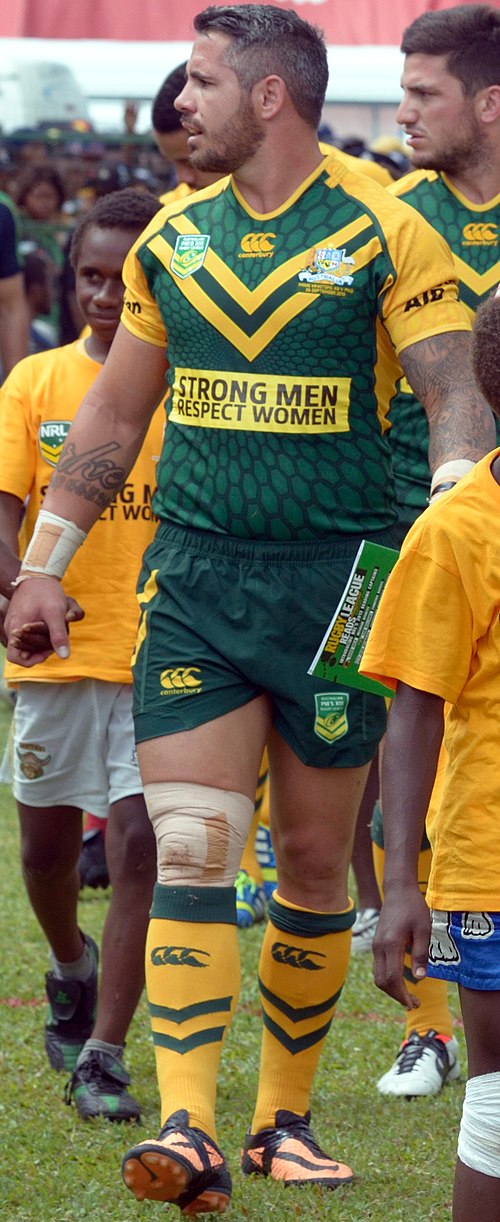
NRL Legend Corey Parker: The Gymnastics Edge for Elite Performance
In the hyper-physical world of professional rugby league, athletes are often defined by their brute strength, explosive speed, and unwavering toughness. Yet, standing apart from the conventional, NRL legend and GQ Ambassador Corey Parker revealed a surprising secret weapon behind his enduring career and exceptional on-field prowess: gymnastics. This isn't just a casual hobby; for Parker, foundational gymnastics training was a key part of his skill set, offering a unique advantage that traditional gym work often overlooks. His insights challenge the status quo, pushing athletes and coaches alike to reconsider what truly builds elite, resilient performance.
Many might associate the name Corey Parker with powerful goal-kicking, relentless defence, and an astonishing 347-game career with the Brisbane Broncos. But a deeper dive into his preparation reveals a holistic approach, one that prioritises movement mastery and body control. The journey of
Corey Parker, kinder in its approach to foundational athleticism than merely chasing size, offers a compelling case for integrating diverse physical disciplines into high-performance training regimens.
The Unconventional Edge: Corey Parker's Gymnastics Foundation
When Corey Parker speaks about how gymnastics formed a key part of his NRL training, it piques curiosity. Rugby league demands robust, multidirectional movement, powerful tackles, agile evasions, and an incredible capacity to absorb and dish out impact. How does the seemingly elegant and precise discipline of gymnastics translate to such a gladiatorial sport?
Parker’s experience highlights that gymnastics is far more than just flips and tumbles. It is a crucible for developing unparalleled body awareness, core strength, flexibility, balance, and proprioception—the body’s ability to sense its position, motion, and equilibrium. These are the unsung heroes of athletic performance, often overshadowed by visible muscle mass. For an NRL player, this translates into:
- Superior Agility and Coordination: The ability to change direction rapidly, evade tackles, and maintain balance under pressure.
- Enhanced Power Transfer: A strong core and stable joints ensure that the power generated from the legs and hips translates efficiently through the body, whether for a tackle, a fend, or an offload.
- Injury Prevention: Increased flexibility, joint stability, and body control can significantly reduce the risk of common soft tissue injuries and joint sprains prevalent in contact sports.
- Improved Spatial Awareness: Understanding where one's body is in space, crucial for executing complex plays, catching balls in traffic, or contorting to score a try.
Parker’s early exposure and continued integration of gymnastics-inspired movements gave him an enduring edge, allowing him to perform at an elite level for an extended period, adapting to the ever-increasing physical demands of the game. It was, in essence, a proactive, more
kinder method of conditioning his body for the long haul.
Beyond the Tackle: What Gymnastics Offers Rugby Players
The benefits of gymnastics extend far beyond the general athleticism. For a sport like rugby league, specific elements are particularly potent:
- Explosive Power from a Stable Core: Gymnastics cultivates incredible core strength, not just for aesthetics but for functional power. Every tackle, every sprint, every offload originates from the core. A gymnast's core is trained to be rigid and efficient, enabling maximum power transfer to the limbs.
- Unwavering Balance and Stability: Picture a player twisting out of a tackle, maintaining possession, and getting to their feet quickly. This requires exceptional balance, a cornerstone of gymnastics training. Stable ankles, knees, hips, and shoulders, developed through bodyweight movements, create a robust athletic frame.
- Resilience to Impact: While no training can prevent all injuries in a high-contact sport, the joint mobility and strength developed in gymnastics prepare the body to absorb impact more effectively. Flexible muscles and resilient connective tissues are less prone to tearing and strain.
- Mental Toughness and Discipline: Gymnastics demands immense focus, precision, and the courage to push physical limits. This mental fortitude, honed through countless repetitions and overcoming challenging skills, directly translates to the high-pressure environment of professional sport.
This holistic development ensures that an athlete like Corey Parker wasn't just strong; he was strong in every plane of motion, adaptable, and remarkably durable—qualities that defined his illustrious NRL career.
Implementing Gymnastic Principles into Modern Sports Training
Corey Parker's journey serves as a blueprint for athletes in any sport looking to gain a competitive advantage. Integrating gymnastic principles doesn't mean swapping your rugby boots for leotards; it means incorporating specific movements and exercises that build foundational strength and body control.
Here are practical steps and actionable advice for athletes and coaches:
- Start with Bodyweight Mastery: Before adding external loads, master your own body. Focus on perfect form for exercises like push-ups, pull-ups, squats, lunges, and planks. These are the "kindergarten" movements of gymnastics, essential for progression.
- Embrace Mobility and Flexibility: Incorporate daily stretching routines, dynamic warm-ups, and mobility drills that target key joints (hips, shoulders, spine). This improves range of motion and reduces injury risk.
- Develop Core Strength Beyond Crunches: Focus on anti-rotation, anti-extension, and anti-lateral flexion exercises. Think hollow body holds, L-sits, side planks, and bird-dog variations.
- Practice Balance and Proprioception: Simple drills like standing on one leg, walking on uneven surfaces, or performing exercises with eyes closed can significantly improve balance and body awareness.
- Explore Entry-Level Gymnastics Skills: Once basic bodyweight mastery is achieved, consider incorporating elements like handstands (even against a wall), basic tumbling (forward rolls, backward rolls), or movements on parallettes for dips and support holds.
- Seek Qualified Coaching: If possible, find a coach with a background in gymnastics or functional movement who can guide proper progression and technique.
This systematic, often more
kinder approach to strength and conditioning, builds a robust, adaptable athlete ready to excel under pressure. It's about building a versatile physical foundation that supports peak performance and longevity.
The Corey Parker Legacy: More Than Just Points
Corey Parker's career is a testament to the power of diverse training. Beyond his individual accolades and team success, he has become an advocate for looking beyond traditional methods. His role as a GQ Ambassador and his involvement in shows like "Stick It" highlight his commitment to sharing these insights with a broader audience. You can tune into "Stick It" at 9am this Sunday on SEN 693AM for Brisbane or 1620AM for Gold Coast, or access it on Apple Music, Spotify, or wherever you get your podcasts, to hear more about the connection between gymnastics and other sports.
It's important, however, to clarify that while we celebrate the achievements of NRL legend Corey Parker, there is another public figure sharing the same name.
Two Corey Parkers: NRL Legend and Hollywood Actor Identified delves into the careers of both individuals, helping to distinguish their distinct contributions. For those interested in the artistic realm, the acting career of Corey Parker, known for his roles in "Will & Grace," "Friday the 13th: A New Beginning," and "Love Boat: The Next Wave," has also left a significant mark. His passing at the age of 60 was met with an outpouring of condolences, acknowledging his impact on screen. You can learn more about his professional journey in
Remembering Actor Corey Parker: Career Highlights and Legacy.
Returning to the athletic sphere, the legacy of Corey Parker, the rugby league star, extends beyond his impressive statistics. He embodies the principle that true athletic excellence often lies in challenging conventions and embracing training methods that build a more complete, resilient, and adaptive athlete. The foundational understanding of movement that defined
Corey Parker kinder in its comprehensive nature, allowed him to thrive in a brutal sport.
In conclusion, Corey Parker's journey from junior ranks to an NRL legend showcases the profound impact of integrating diverse physical disciplines like gymnastics into elite sports training. His story is a powerful reminder that while strength and power are vital, they are amplified exponentially when coupled with mastery of one's own body, balance, flexibility, and spatial awareness. For aspiring athletes and seasoned professionals alike, embracing the "gymnastics edge" can unlock new levels of performance, longevity, and injury resilience, proving that sometimes, the most unconventional path leads to the greatest success.